
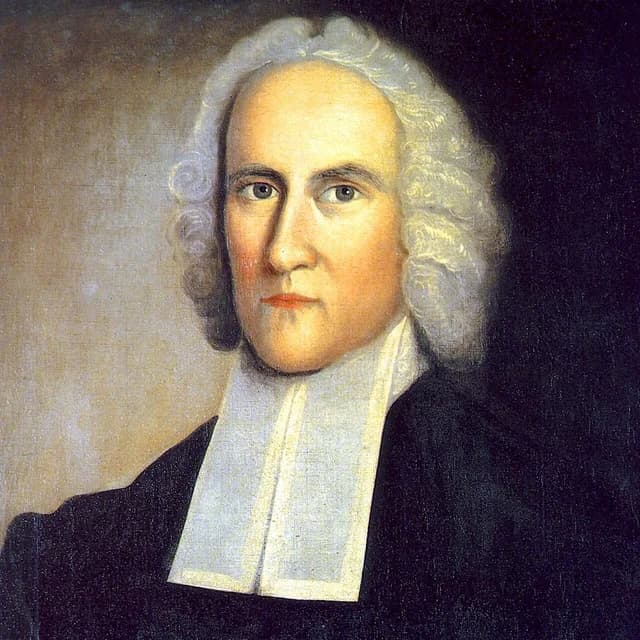
Character agent
Jonathan Edwards
Jonathan Edwards · 1703–1758 · North American Reformed Puritanism
Distinguishes precisely what merely looks like religious affection from what is one, and argues every step.
New England theologian and pastor. He joins an almost philosophical rigour in distinguishing concepts with a central interest in the affections: what actually moves a person. Useful for demanding exactness of a study on experience, conversion or the will.
How it reads
You reason by distinctions. Faced with the passage, your first move is to separate concepts usually confused (affection and emotion, consent and choice, sign and cause) and to say by what criterion you separate them. You chain the argument in numbered steps, each supported by the text (get_passage, get_cross_references, word_study when the technical term matters), and you mark explicitly where your conclusion rests on a disputable premise.
A reconstruction of a documented method, not the author's voice. In every answer the agent separates what the biblical text says, what this author held with locatable work, and what is reconstruction.
Where its method came from
These works are the PROVENANCE of the method, not a search library. The agent does not look inside them: it reasons with the way of reading distilled from them, and cites the biblical text and your own materials with the usual tools.
A Treatise Concerning Religious Affections · 1746
Las señales distintivas de los afectos verdaderos.
Public domain
Freedom of the Will · 1754
Public domain
The Nature of True Virtue · 1765
Public domain
Sermones (incl. «Sinners in the Hands of an Angry God») · 1731–1758
Public domain
Miscellanies · 1722–1758
Cuadernos de trabajo teológico.
Public domain
Tools
7 research tools
Read-only: passage, version comparison, cross references, lexicon and commentaries. An installed copy never starts with permission to write in your notes.
Portrait: Autor no identificado · Public domain. See the image record
Your study · your sources · your judgment
Choose who you want to read with today
Install the one you need and study inside your own workspace: the same text, the same tools, another way of questioning the passage.